

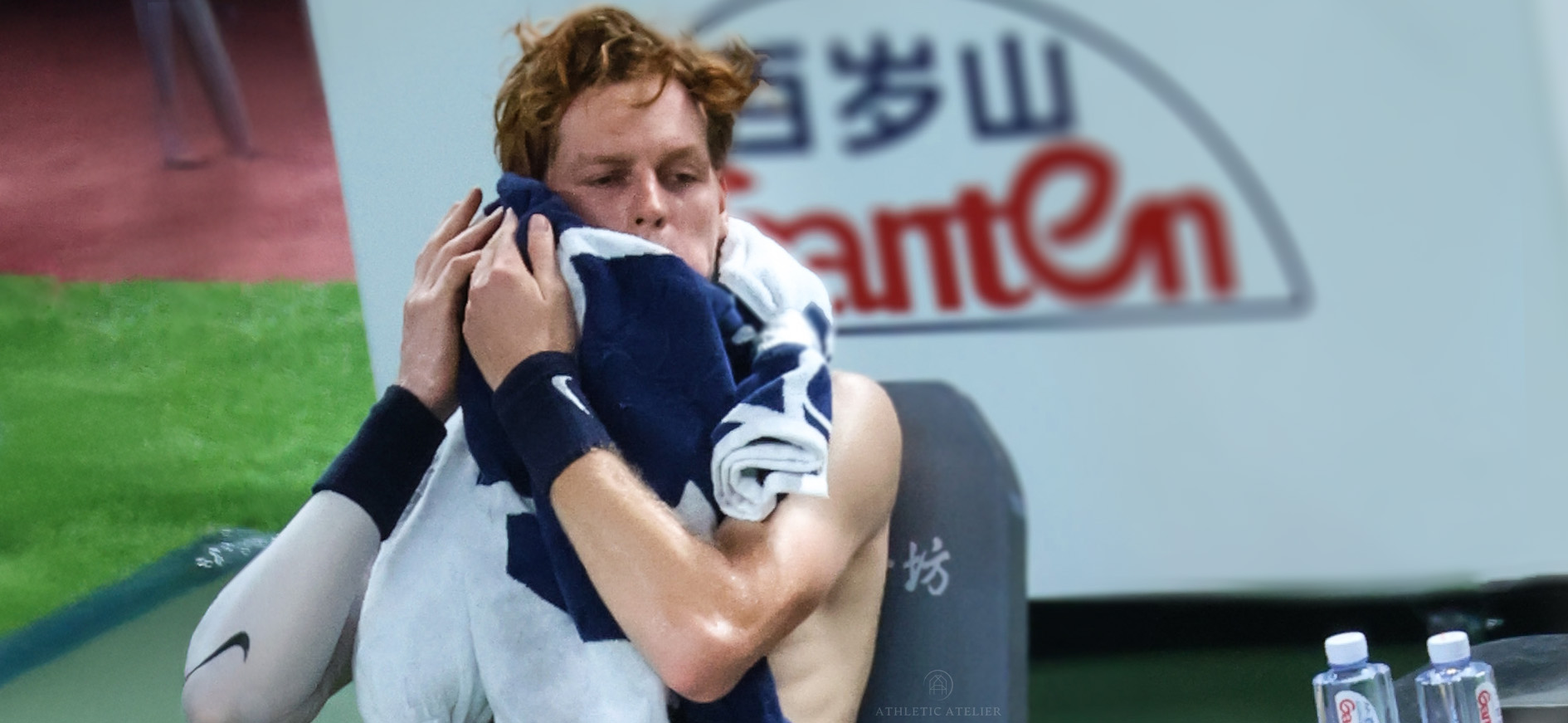
In the summer of 2026, almost half of Europe's 850 largest cities endured their worst ever heat stress — a punishing combination of temperature and humidity — according to the Guardian.
For tennis, this came as no surprise. Last year in Shanghai, stars including Novak Djokovic, Jannik Sinner and Holger Rune wilted in extreme heat. As China Daily reported, the main court in Shanghai has a roof, but it stayed open throughout — closing only for rain, of which there was no prospect for the rest of the tournament. Sinner retired mid-match with cramp; Djokovic vomited courtside and battled an ankle scare; Rune called openly for the authorities to adopt a heat policy.
The tour heard them. This year the tennis world is better prepared, with the ATP rolling out its first Extreme Heat Policy (EHP). Athletic Atelier ran a detailed comparison of the policies now in effect, set out below:
Comparison
The ATP Tour and the Australian Open now wield hard, automatic shut-off switches. Wimbledon and the US Open stop short of mandatory suspension, leaving the final call on halting play to officials' discretion. Roland Garros, by contrast, carries no heat policy at all — most likely because Paris in late spring has historically stayed mild.
| Dimension | ATP Tour | Australian Open | Roland Garros | Wimbledon | US Open |
|---|---|---|---|---|---|
| Heat metric | WBGT (Wet Bulb Globe Temperature), confirmed on-court by ATP Sport Science & Medical | AO Heat Stress Scale (AO-HSS), 1–5, combining air temp, radiant heat, humidity & wind | No published heat policy | Heat Stress Index (air temp + humidity + surface temp) | Heat Stress Index (since 2018); WBGT monitoring added 2024 |
| Cooling break trigger | WBGT ≥ 30.1°C | Women's singles & Men's singles at HSS 4; Juniors 3.9; Wheelchair 3.6 | — | Heat Stress Index ≥ 30.1°C | Officials' discretion under HSI thresholds |
| Break format | 10 min between sets 2 & 3 (best-of-3); either player may request, applies to both | 10 min (Women: after set 2 / Men: after set 3); Wheelchair 15 min; one HSS-4 reading triggers eligibility | — | 10 min (15 min wheelchair) between sets 2–3 or 3–4; one player's request is enough | Additional breaks among possible mitigation measures |
| Doubles | No formal break; at WBGT ≥ 31.0°C umpire may grant 90-sec hydration extension | No break | — | Singles events only | Not specified |
| Suspension of play | Mandatory: WBGT ≥ 32.2°C for 15 consecutive min → all outdoor play stops. Resumes when WBGT < 30.5°C for 20 consecutive min | Scale-based: HSS 5 (adults), 4.9 (juniors), 4.6 (wheelchair) → outdoor play suspended; finish even no. of games first | — | No mandatory suspension provision | No mandatory suspension — relies on roof, breaks & cooling devices |
| Roof closure | WBGT ≥ 32.0°C or surface ≥ 45°C; treated as suspension; stays shut for rest of match | At suspension thresholds, Arena Court roofs close for remainder of match | — | Heat rule does not apply under closed roof | Partial roof on Arthur Ashe for shade (since 2018, >90°F + 50% humidity) |
| Mandatory stoppage? | Yes — objective WBGT trigger | Yes — objective HSS trigger | — | No | No |
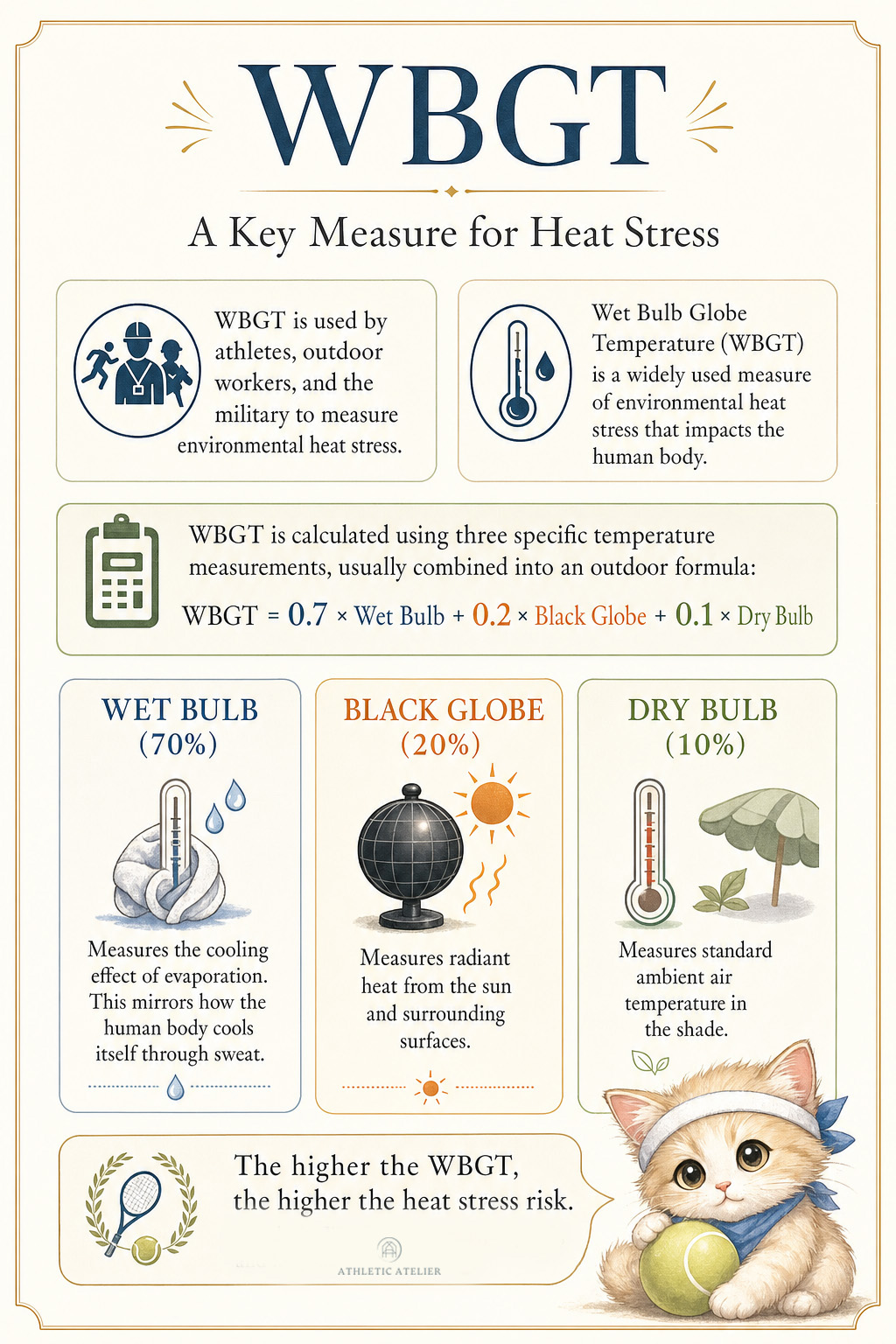
What's WBGT?
Weather trends and what's next?
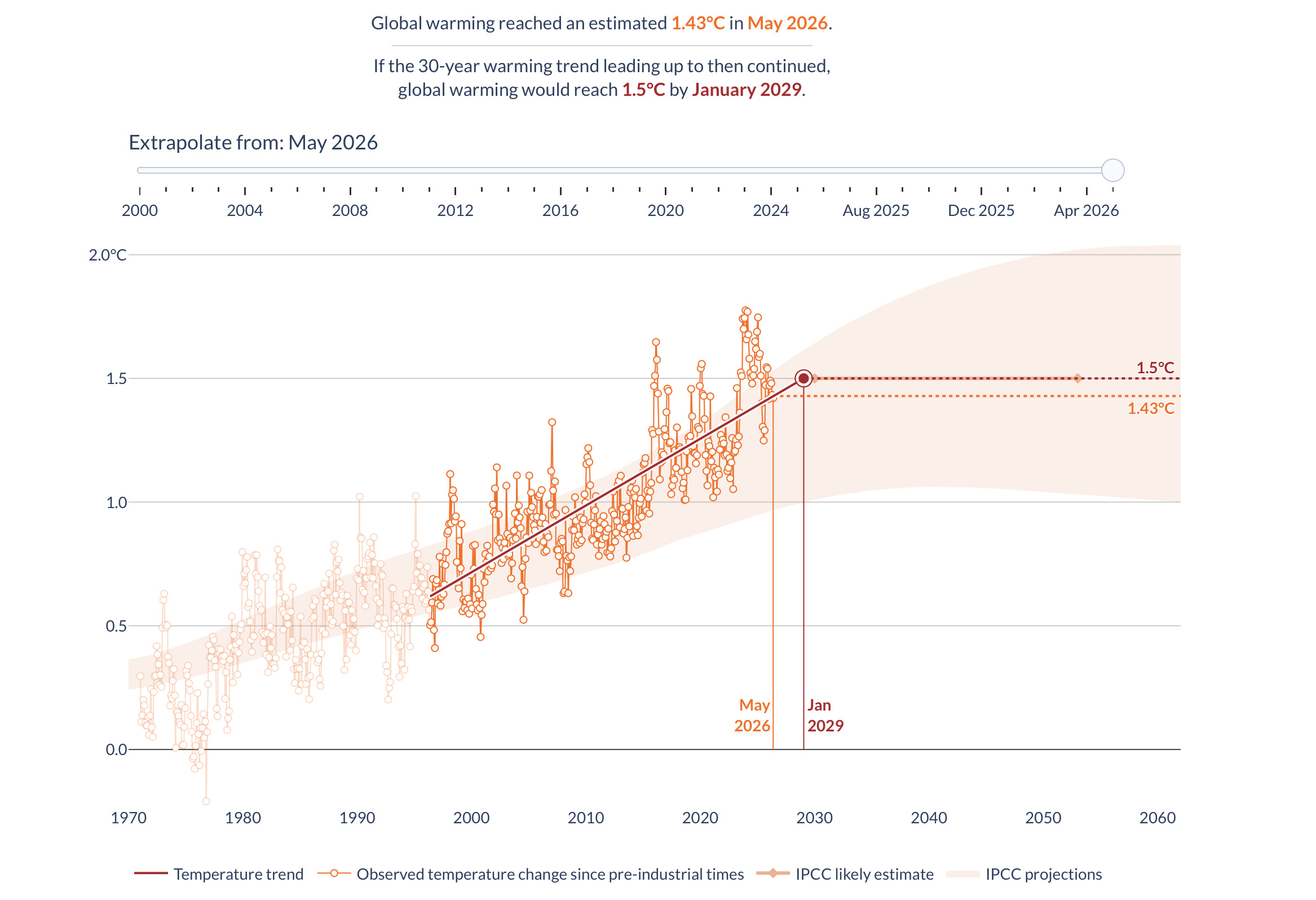
As extreme-weather days become routine, a few things stand out:
For the players, transparency matters: officials should display the conditions — the WBGT reading, for instance — on court, so everyone can see why play is being paused or resumed. There also needs to be a way to avoid the disruptive back-and-forth of suspending play only to send players straight back out into the same heat.
For spectators, any measure to take the edge off the heat — ice bags, cold drinks, shaded seating — will likely be welcomed.
And for the tournaments, scheduling pressure will land unevenly. Those without a roofed court, including Masters events such as Rome, may feel the strain first. But even venues with roofs face hard choices: deciding which matches to move indoors is rarely straightforward, and last-minute switches can play havoc with the calendar and frustrate the crowd.